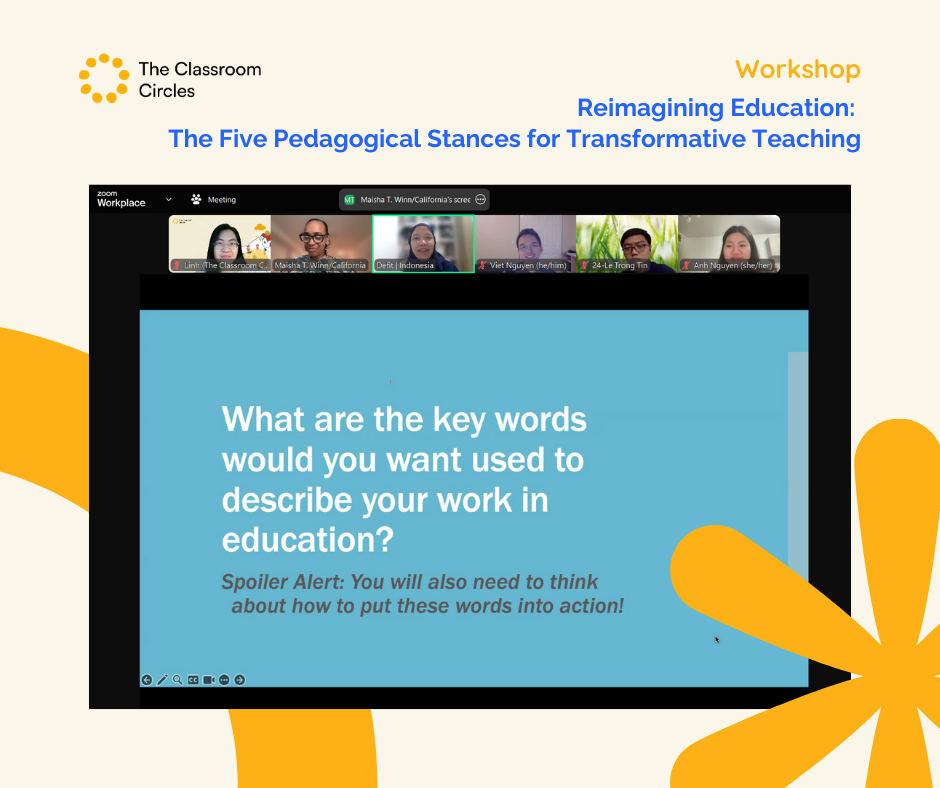
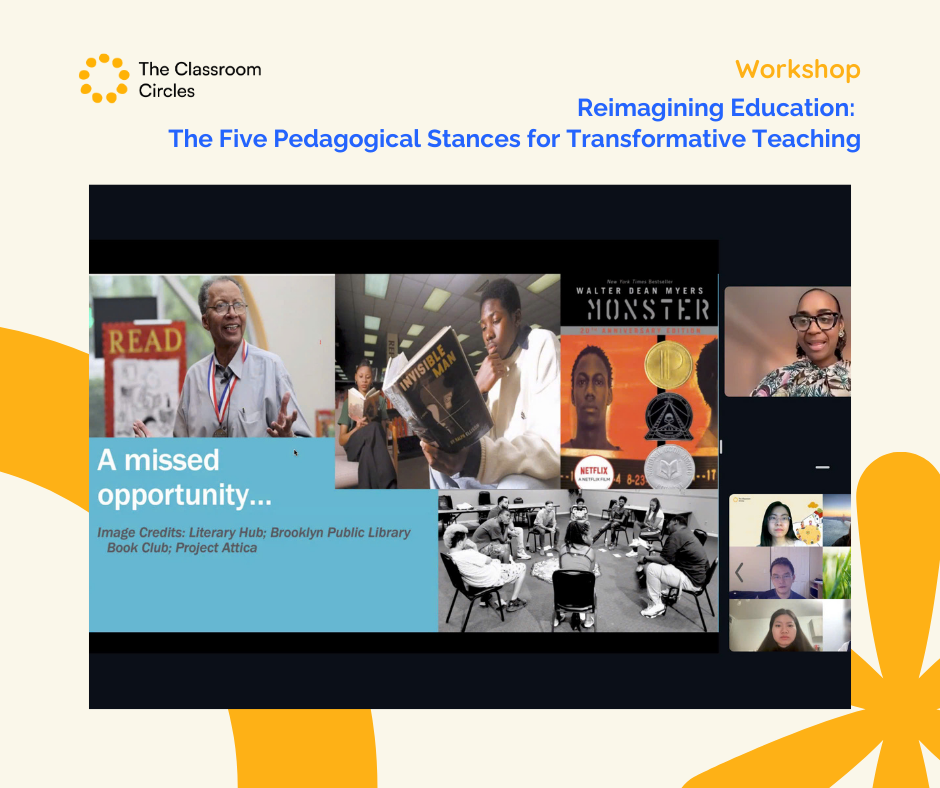
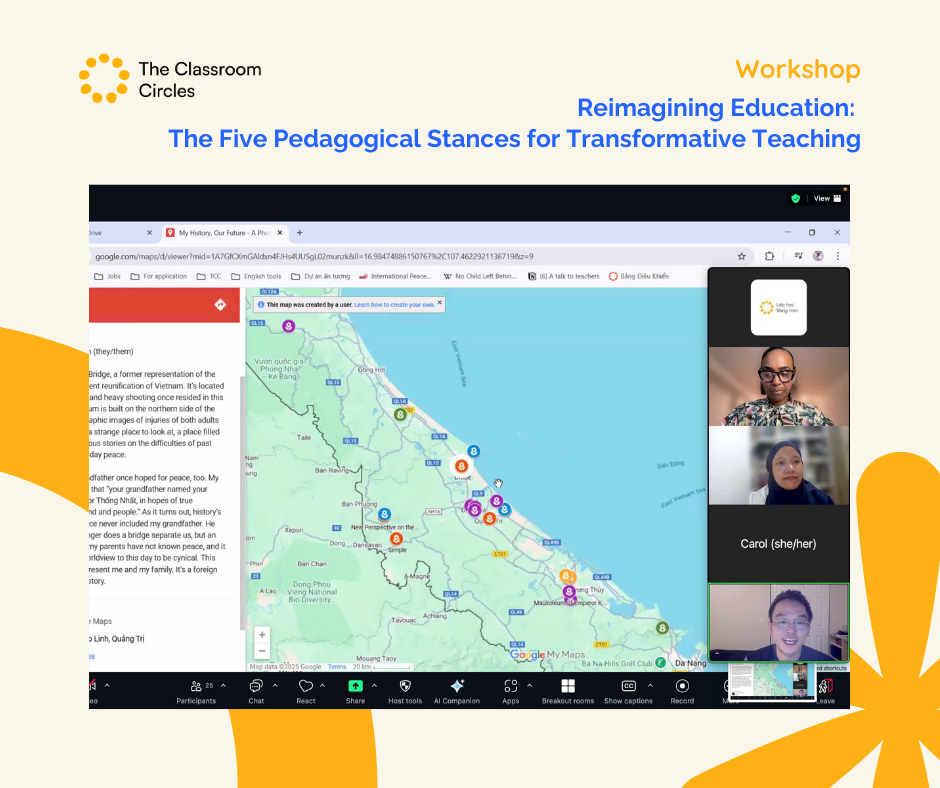
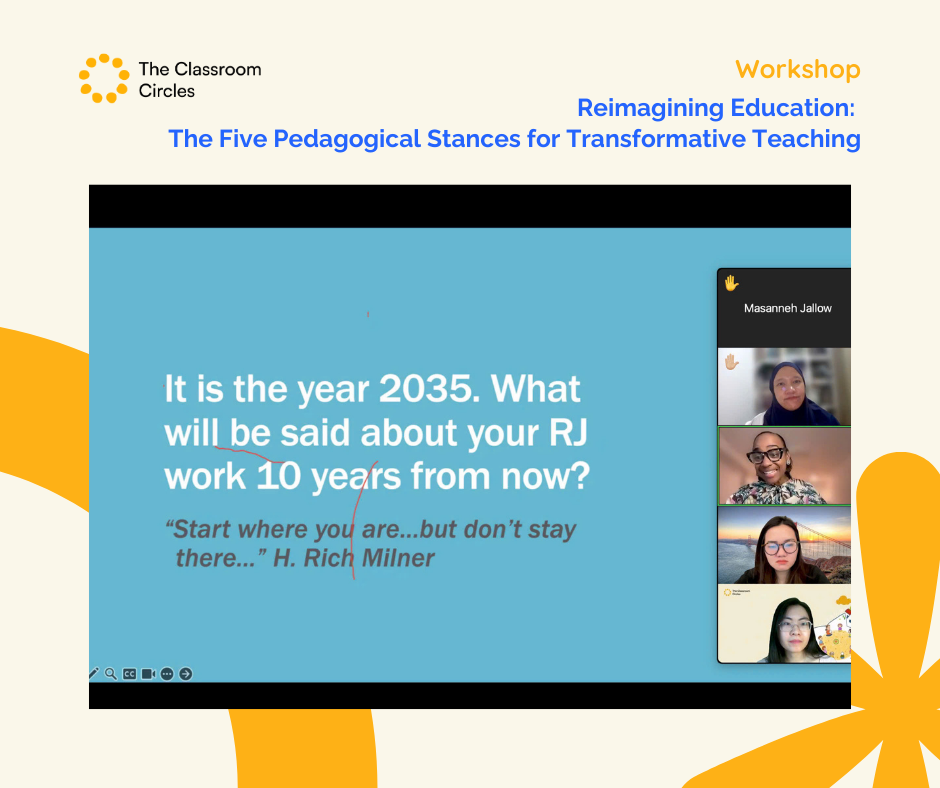
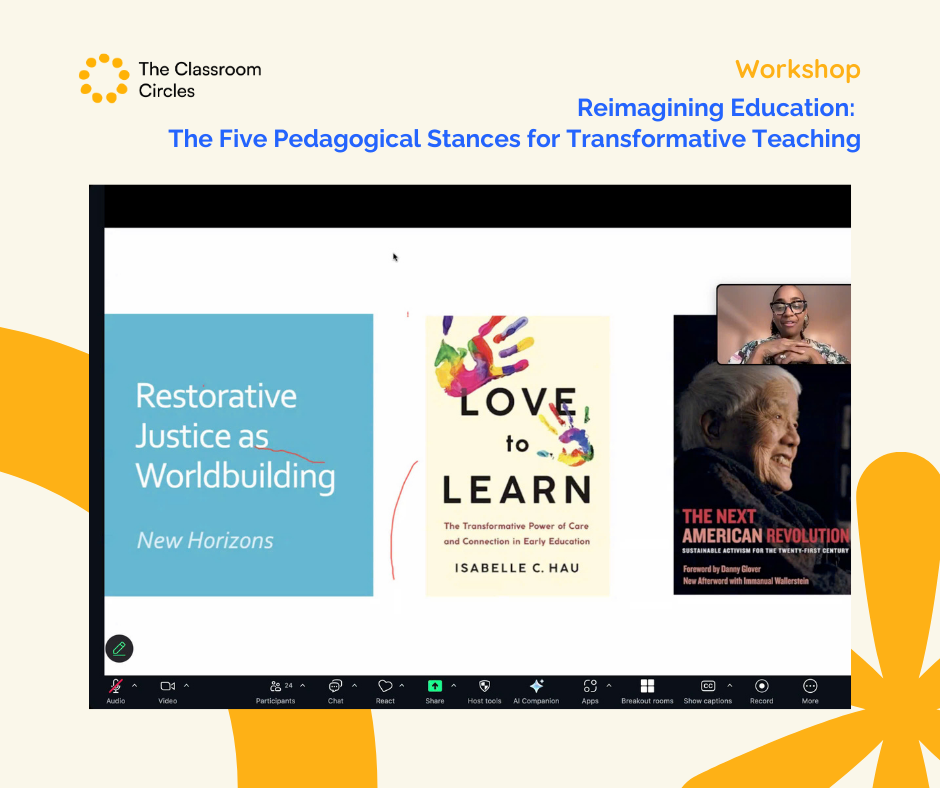
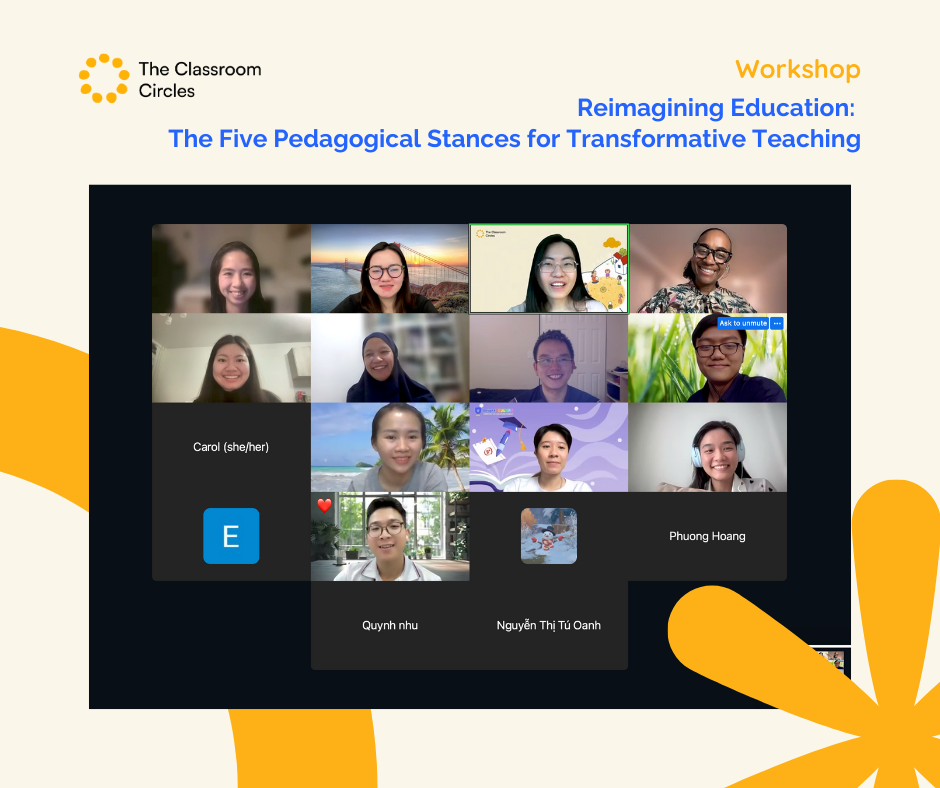
On March 15, 2025 the fifth webinar, titled “Reimagine Education: The Five Pedagogical Stances for Transformative Teaching,” welcomed educators, researchers, and teachers from Vietnam, Indonesia, the United States, Canada, and Zambia to engage in discussion.
The session began with a personal teaching story shared by the speaker, highlighting the importance of educators objectively reflecting on their pedagogical approaches. The key question raised was whether we, as teachers and educators, are genuinely supporting students or unintentionally exacerbating challenges in the learning environment.
Professor Winn introduced the five pedagogical stances she developed, aiming to reshape teaching methods to be more inclusive, historically conscious, diverse in voices, and geared toward a more just future. The summary below provides an overview of these stances:


Examining and discussing each pedagogical stance requires the active participation of diverse members within the community of practice. This process not only allows individuals to reflect on their own experiences but also places them in a broader historical context, helping to identify connections between oneself and the community. At the organizational level, engaging with these stances presents an opportunity for educational institutions to reassess their practices, evaluate their responsiveness to current needs, and shape meaningful future goals.
During the discussion, thought-provoking questions were raised, including the role of culture in the five pedagogical stances. Professor Winn emphasized that culture is embedded across all five stances and that the spirit of restoration and community-building creates space for the ongoing development of new perspectives. Further insights and responses from Professor Winn will be shared in the upcoming “Let’s Talk” series of the project.
This webinar also marked the final event in the “From Local to Global: Dialogues on Restorative Practices in Education” workshop series—a journey exploring educational models and the application of Restorative Practices. For the project team, this milestone is a crucial step in shaping the next phase of co-creating a sustainable education system. We look forward to seeing educators, teachers, and participants again in future events.
The English terms used in this article are tentative translations based on the author’s understanding. We welcome any feedback via inbox or project email!