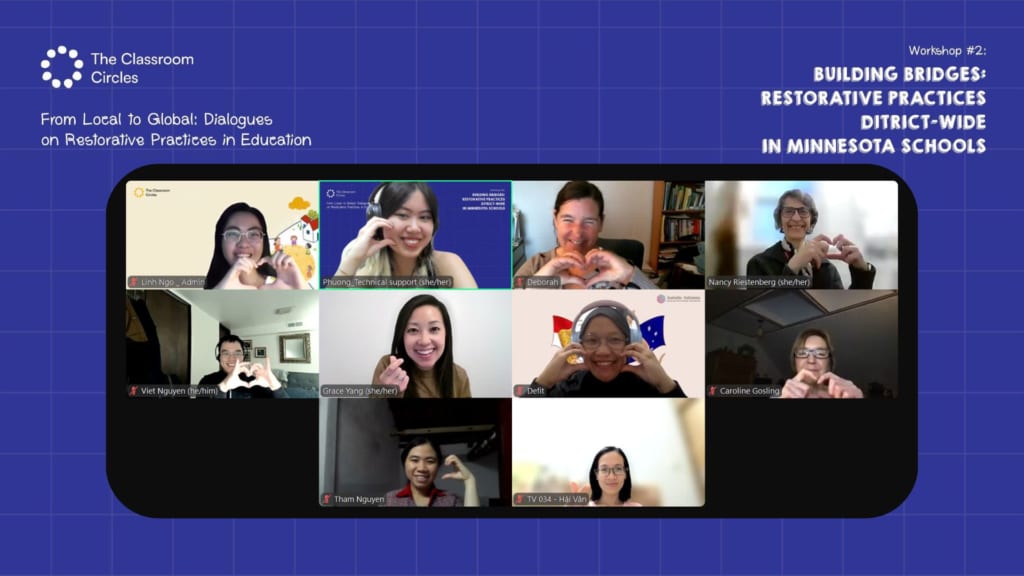
Workshop 2, titled “Building Bridges: Restorative Practices District-Wide in Minnesota Schools,” took place on November 15, 2024. Organized as an interactive workshop, the session welcomed a diverse group of participants:


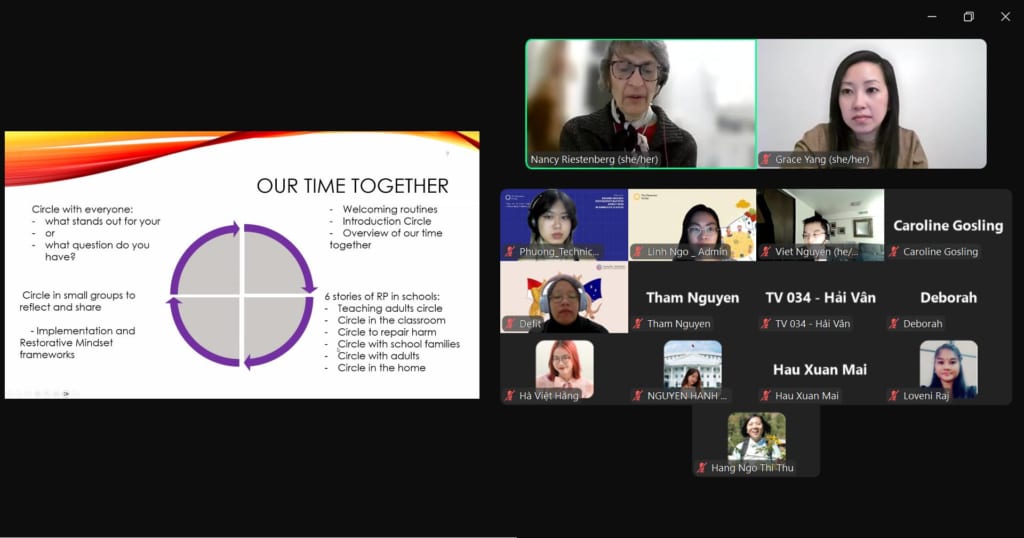
Based on the Circle Practice introduced in the first workshop, each school applies restorative practices differently depending on the context, needs, and participants involved. Therefore, sharing real-life examples is the most effective way to convey the restorative spirit. Six stories were shared, detailing the experiences of Grace and Nancy in their roles as facilitators and restorative program advisors in secondary schools in Minnesota.
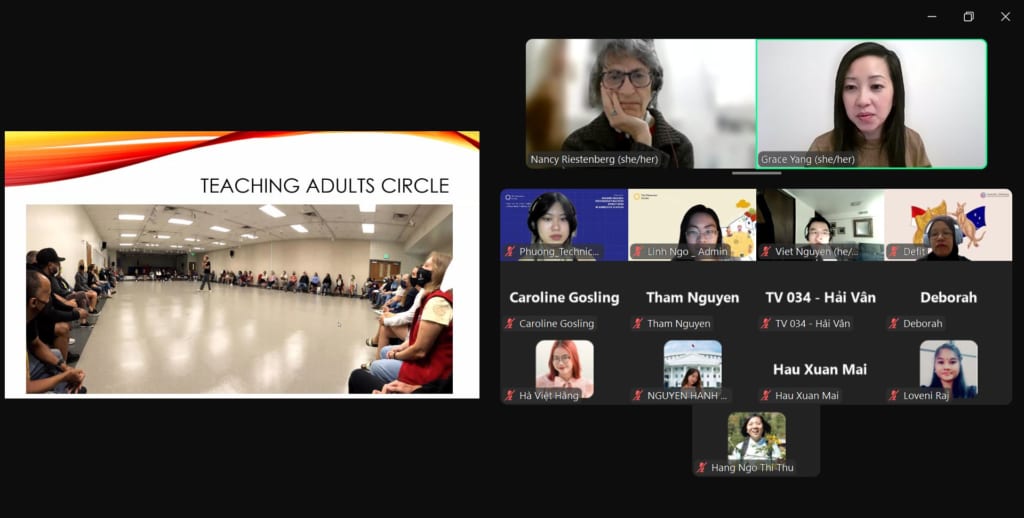
The first story discussed training teachers and staff at an elementary school in restorative practices. Building sustainable relationships among diverse members in terms of ethnicity, personality, and gender is a significant challenge but crucial for implementing restorative practices. Once the shared spirit and values in the school were established, the first check-in circles were organized to prepare for learning activities.
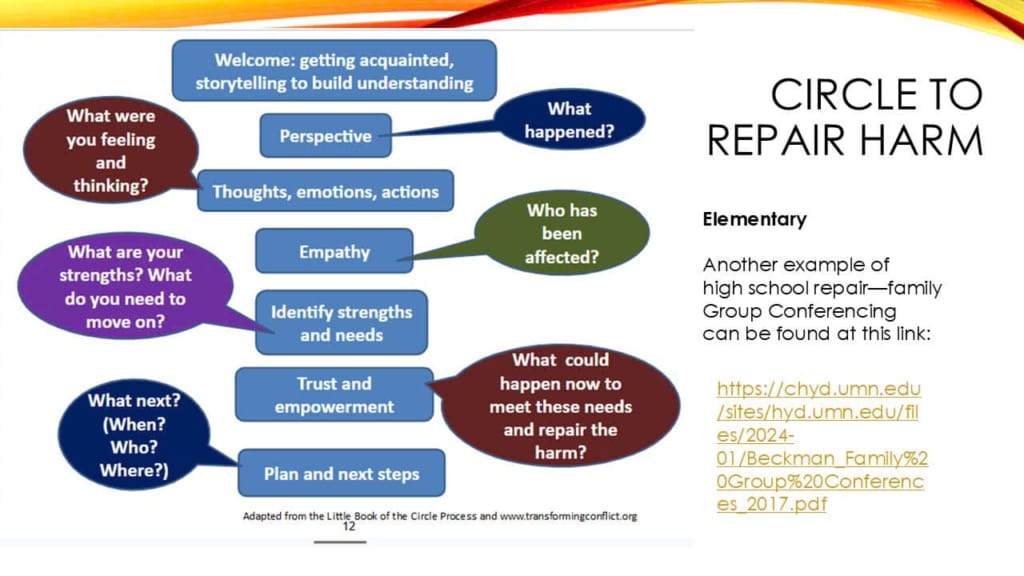
Conflicts between students were common and received attention from teachers. Grace shared her experience of helping two 4th-grade students who faced teasing that could lead to emotional bullying. By asking restorative questions in sequence, both the teachers and students had the opportunity to reflect on the situation and express their thoughts and feelings. Meanwhile, school staff became aware of inequalities in school relationships and developed strategies for raising awareness and fostering more sustainable reconciliation.
Restorative practices not only occur between teachers and students but also extend to parents through exchange circles. During the COVID-19 pandemic, these circles helped maintain connections with students and supported parents in getting their children back to school, as well as sharing the challenges of balancing work, life, and homeschooling.
The most challenging and emotional story shared was the circle with staff and teachers when a student tragically passed away in an accident. The session not only provided emotional support but also allowed them to find ways to support their students and help the school community heal from the emotional pain.
Despite geographical, cultural, and language differences or teaching environments, participants empathized with similar experiences in their own classrooms. We believe this workshop created a safe space for everyone to share their questions and reflections, and together, we recognized the fractures in school relationships and explored ways to resolve them in the spirit of restorative justice.