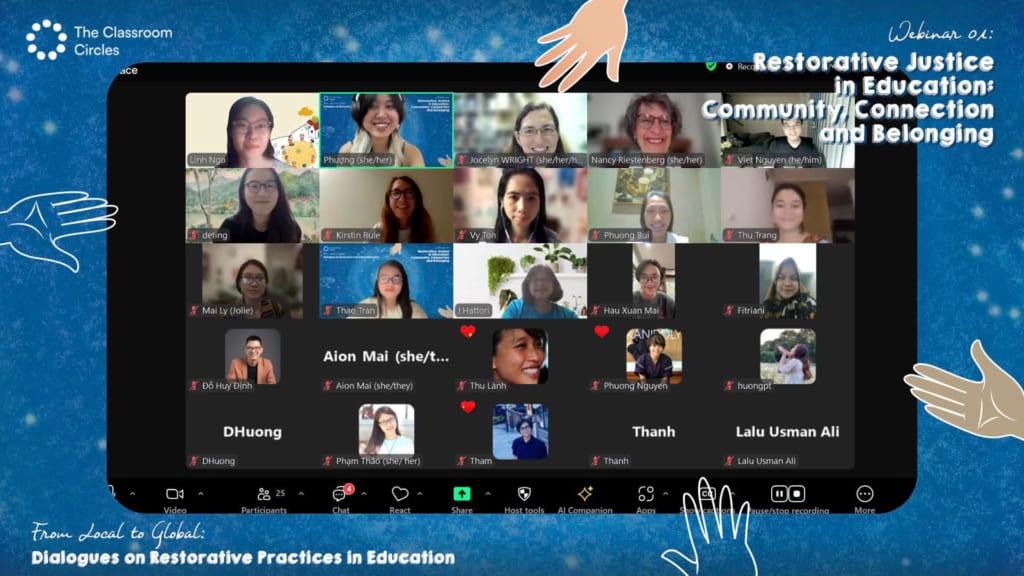
On October 18, 2024, The Classroom Circle successfully hosted the first session of our online workshop series: “Restorative Justice in Education: Community, Connection, and Belonging.”
We were thrilled to welcome 35 participants from Indonesia, Vietnam, Japan, South Korea, and Scotland to our check-in session, guided by our speaker, Nancy Riestenberg. This session provided foundational insights into the origins and applications of Restorative Justice in education.
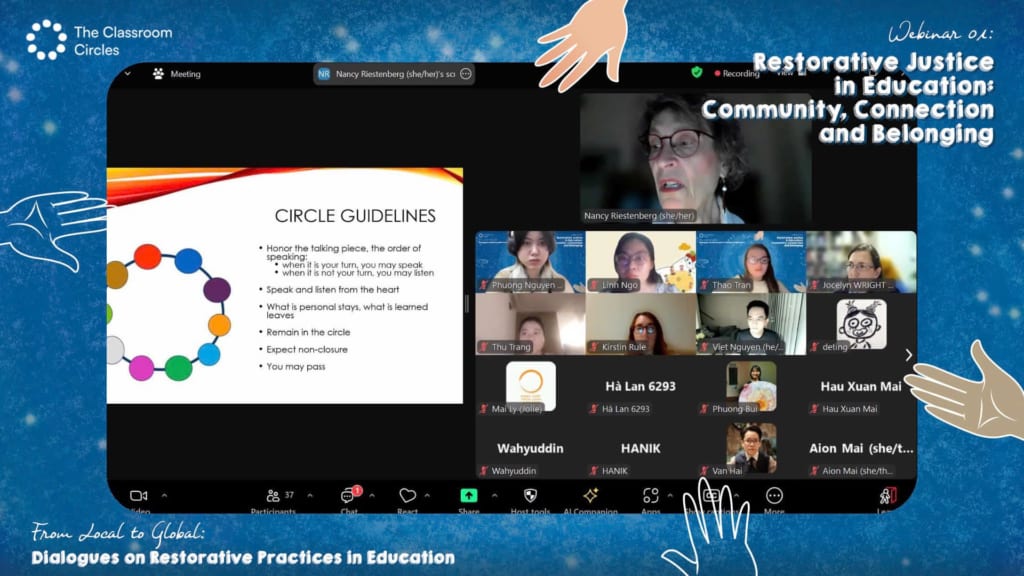
To begin, Nancy introduced the Circle Process, a practice deeply rooted in the wisdom and traditions of Indigenous communities, yet commonly used in today’s world. In a circle space, every participant is invited to share and listen with an open heart, respecting the talking piece and the order of speaking. The discussion emphasized key principles based on human-centered values, including:
✅ Confidentiality of personal stories
✅ Being fully present in the circle
✅ Accepting that not all issues require immediate solutions
✅ The right to speak when one feels ready
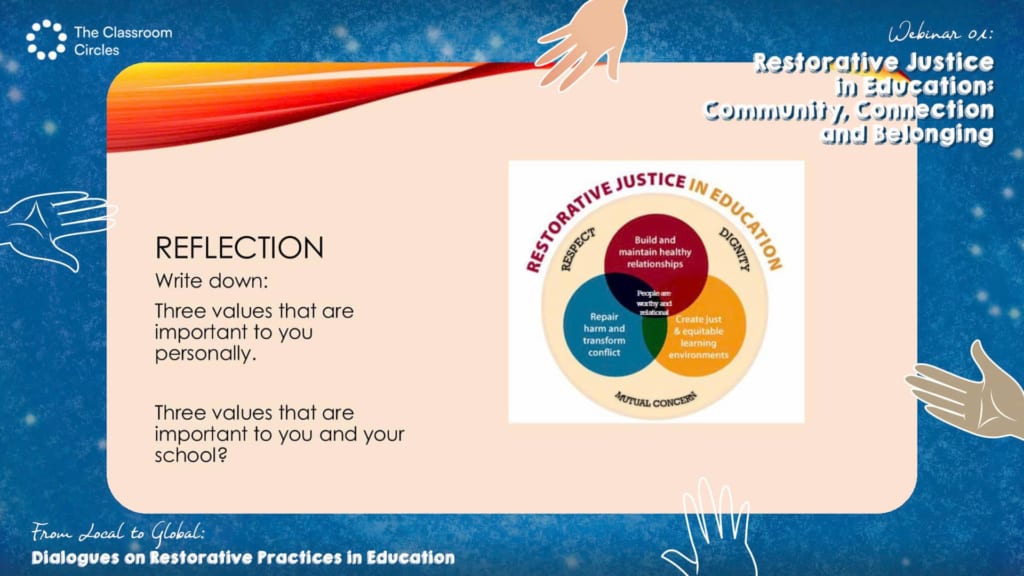
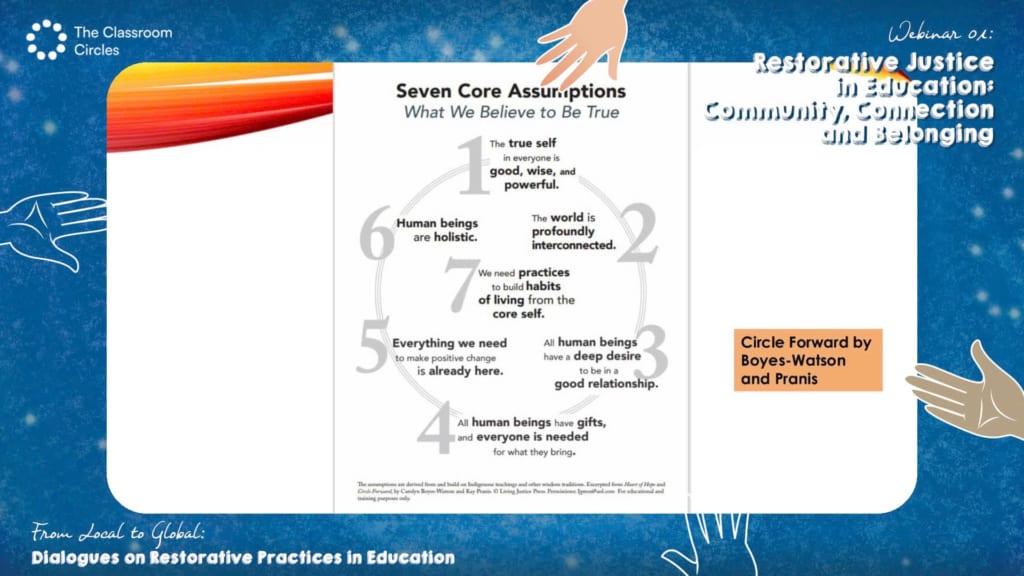
As participants engaged in dialogue, Nancy highlighted how each of us brings our own assumptions, shaped by life experiences and culture. She introduced the Seven Core Assumptions of Restorative Practice, emphasizing that:
🌍 Every individual has inherent value
🌱 We are all connected and interdependent
💡 True belonging and connection are nurtured within any community we engage in
In today’s education system, skill development is often prioritized as a universal solution, yet the relationships and human interactions that shape a child’s worldview and spirit are sometimes overlooked.
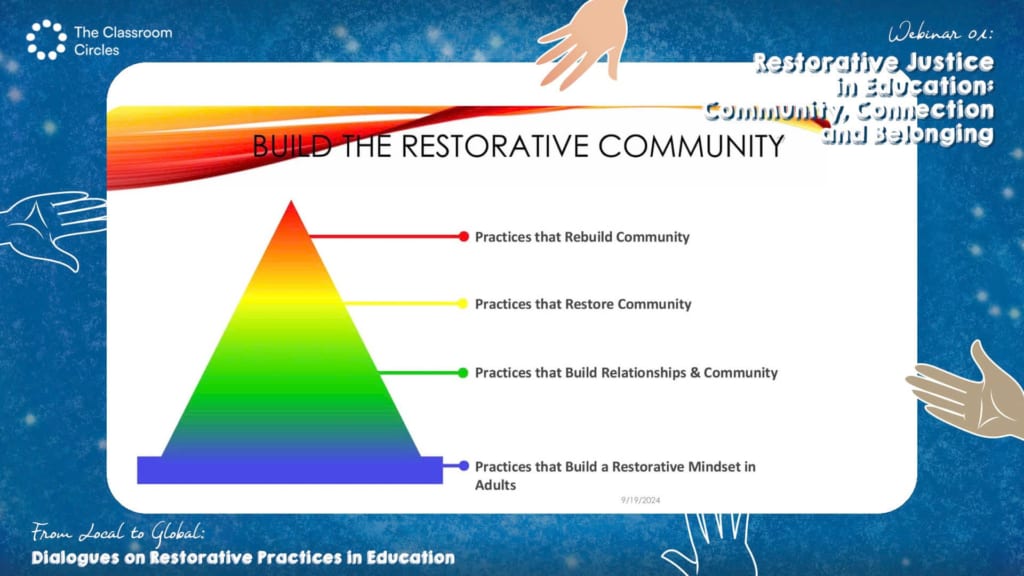
The Restorative Justice in Education framework is structured around four levels of practice:
1️⃣ Cultivating a restorative mindset in educators
2️⃣ Practicing relationship and community-building
3️⃣ Implementing restorative responses to harm
4️⃣ Engaging in community restoration and reintegration
Additionally, Nancy introduced an overview of the Five Pedagogical Stances developed by Dr. Maisha Winn, which provide theoretical foundations for applying Restorative Justice in education.
20 minutes for small-group discussions allows participants to connect and reflect on how restorative practices relate to their work in mental health, teaching, and community engagement.
As we continue our “From Local to Global: Dialogues on Restorative Practices in Education” series, we invite you to stay engaged, explore new topics, and co-create meaningful discussions in future sessions.
A heartfelt thank you to all who joined and helped spread the spirit of community! 🌻✨