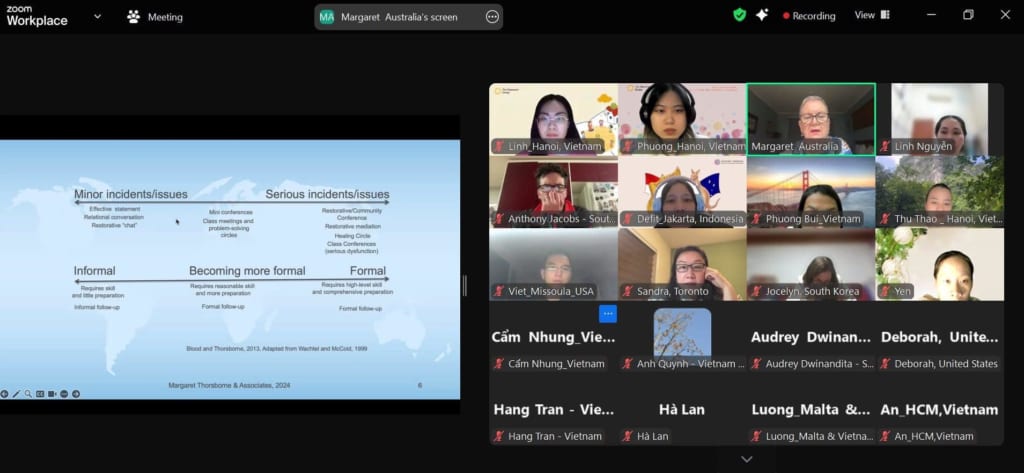
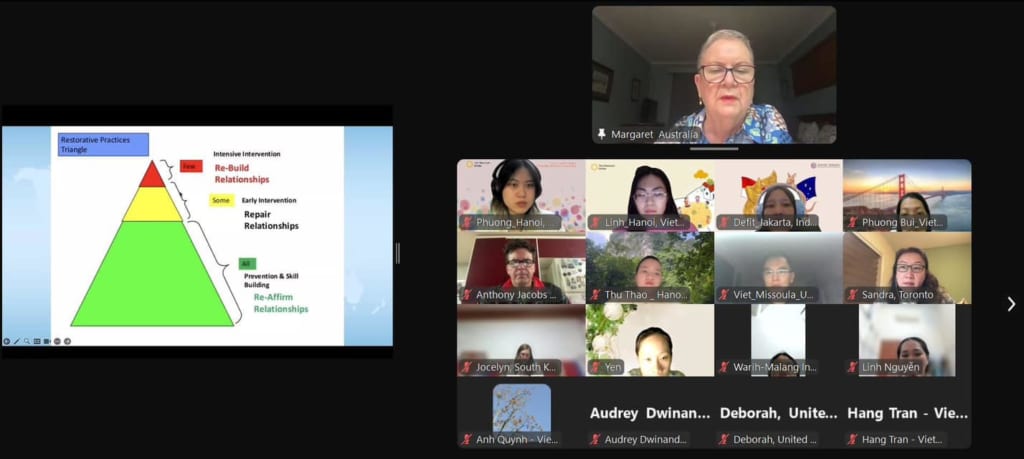
Workshop 3 took place with engaging stories and diverse perspectives on the application of Restorative Justice in school education. To introduce a new theory into schools, it is not necessary to dismantle all existing programs. What is needed is to build a mindset and direction based on educational philosophies that align with the historical, cultural, and social context of the school. Every member of the school community plays an important role in this transformation.
This session welcomed teachers, school counselors, and parents from six different countries. Participants were divided into small groups at the beginning to share their emotions by choosing one of nine sheep images provided. At the same time, each individual set and shared a guiding question for themselves to focus on during the webinar.
The Shift
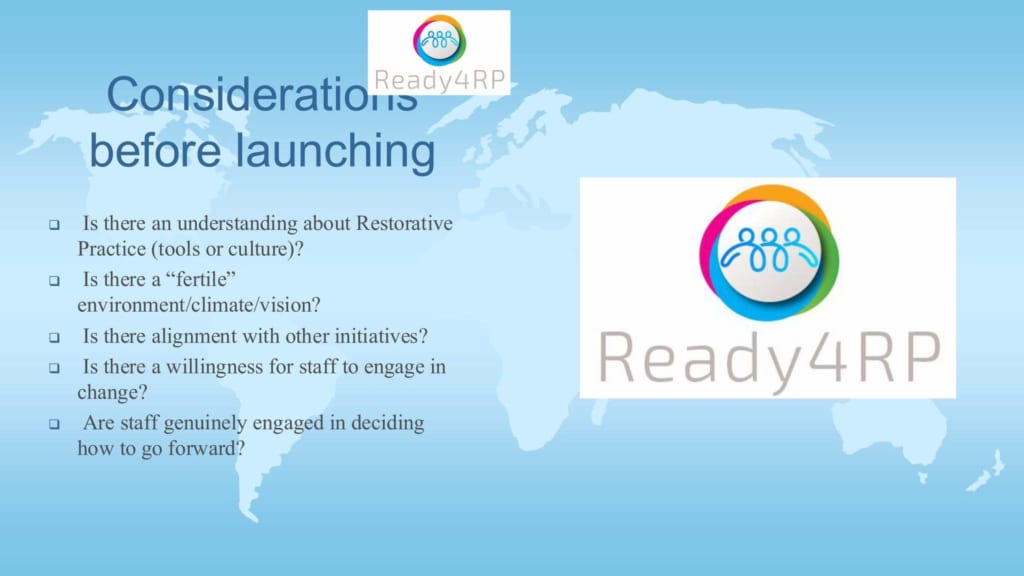
Ms. Margaret began her presentation by discussing the pre-distributed materials on readiness for applying RJ (Restorative Justice) in education in general and in schools in particular. A “ready” school is envisioned as one that values relationship-building, fosters trust, encourages collaboration and empowers decision-making. On the other hand, “unreadiness” is characterized by an authoritarian culture, unhealthy relationships within the school, and a lack of collaboration in decision-making.
How can readiness in schools be shifted?
The Restorative Pyramid Model serves as a guiding framework for implementing restorative approaches, not just in education. The first and most critical layer is to foster connection and understanding among members of the school community. Social-emotional learning activities are integrated at this foundational stage to enhance students’ self-awareness while establishing common conventions to strengthen relationships.
“How can we truly understand students, so they feel valued and heard??”
“How can we create a safe, supportive, and inclusive environment for students?”
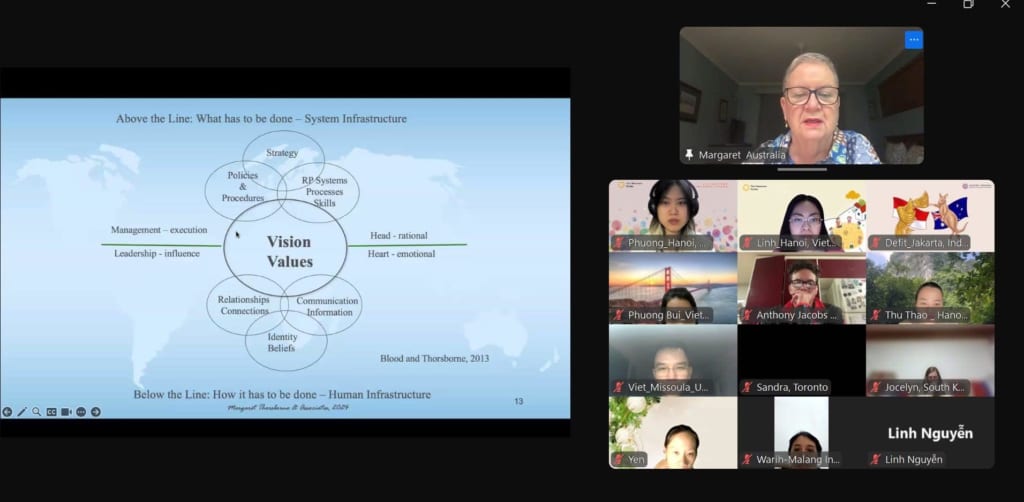
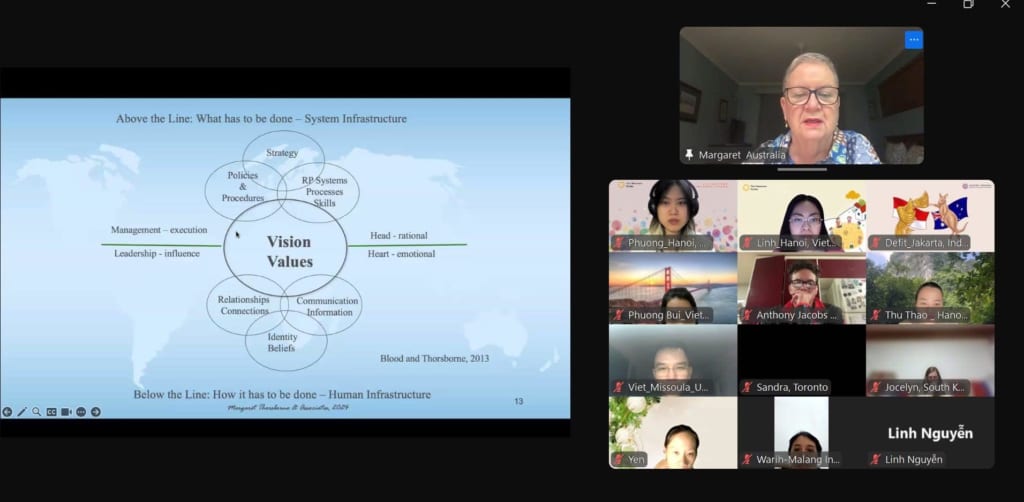
“It’s a long story, yet a beautiful journey,” Ms. Margaret shared. Building readiness for restorative practices in schools is a long and complex process, but it is also a “beautiful” and worthwhile journey. The core of all activities in a restorative school should be guided by its values and vision, with the goal of creating an environment where relationship-building takes precedence over everything else, even the curriculum. A teacher should not only excel in their subject matter but also build loving and trusting relationships in their classroom. To achieve this, schools and teachers must discuss and implement specific strategies each year based on their agreed-upon values and vision.
There were many intriguing questions raised about integrating Social-Emotional Learning (SEL) with Restorative Practices. Ms. Margaret offered a few suggestions:
(i) Encourage understanding how one’s brain works, a topic that tends to captivate both children and adults.
(ii) Start reassessing the policies implemented in schools.
Addressing these issues from both individual and school-wide perspectives enables teachers and school administrators to view problems from different angles, leading to more cohesive and supportive changes. For example, early self-discovery can help students recognize their own values and build resilience in the face of challenges. At the same time, establishing supportive policies, rather than punitive ones, fosters a healthy learning environment that respects and nurtures meaningful relationships.
This webinar served as a thought-provoking session, encouraging educators to address conflicts or psychological wounds not only from an individual standpoint but also from a broader perspective that considers relationships and disciplinary policies in schools. Transforming mindsets in schools is a process that requires significant resources, time, continuous learning, and patience from the entire community.
You can continue following the Let’s Talk series, which compiles questions and answers from the webinar. This is an ongoing journey with much to reflect upon, and we hope to continue these discussions in the future.